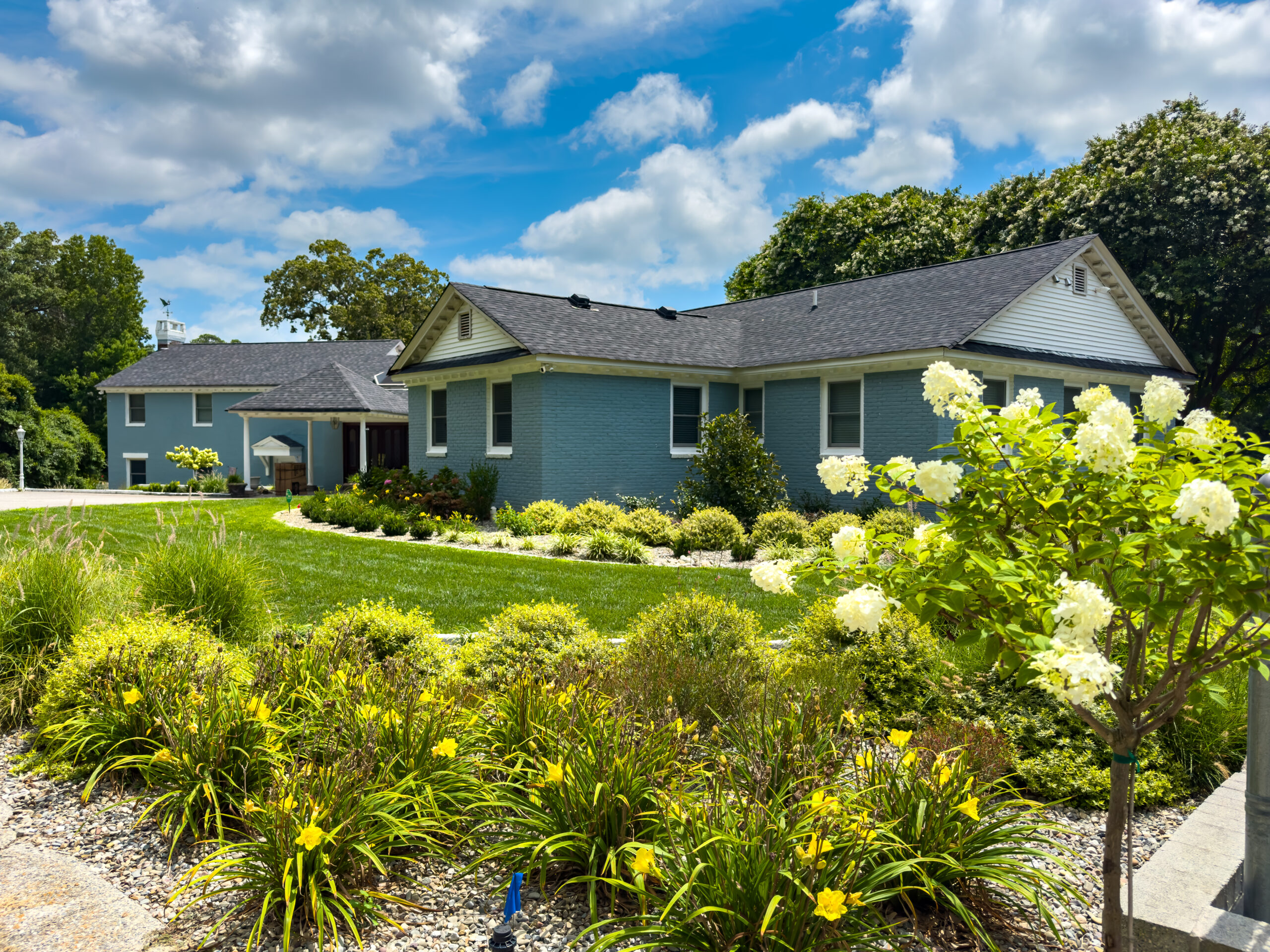
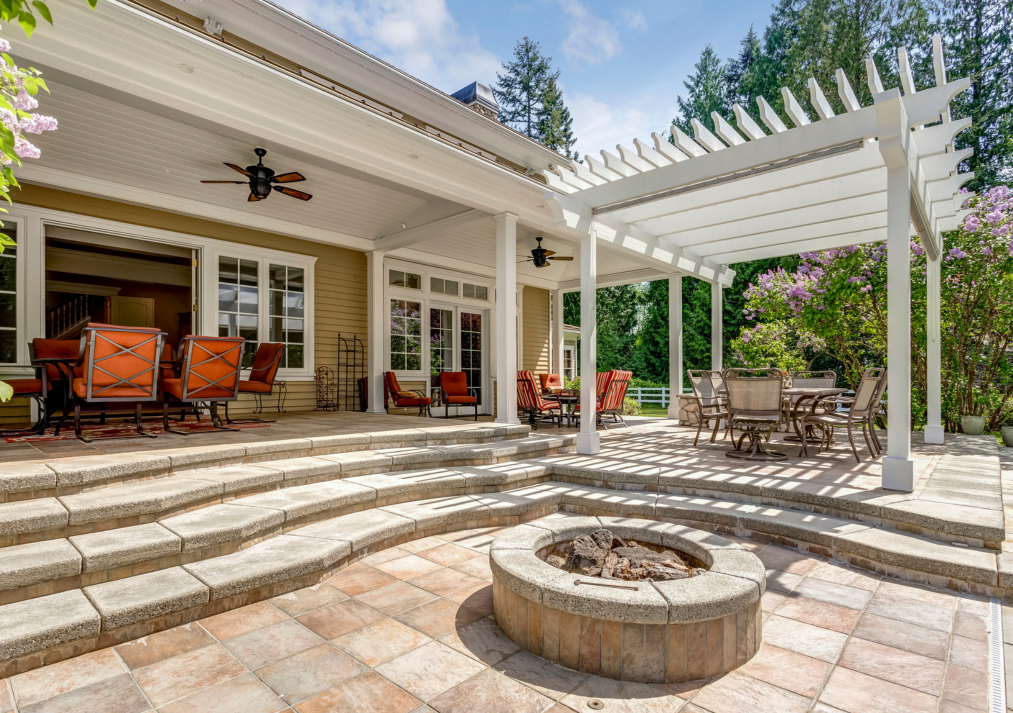
A beautiful landscape starts with more than healthy plants and fresh mulch. Proper drainage is essential for protecting your home, preventing erosion, and keeping your yard looking its best. When water has nowhere to go, it can create soggy lawns, muddy flower beds, damaged hardscapes, and moisture problems around your foundation.
Three effective drainage solutions are underground downspout extensions, French drains, and decorative dry river beds. Each serves a different purpose, and choosing the right one depends on where the water comes from and how it needs to be managed.
Underground Downspout Extensions With Pop-Up Emitters
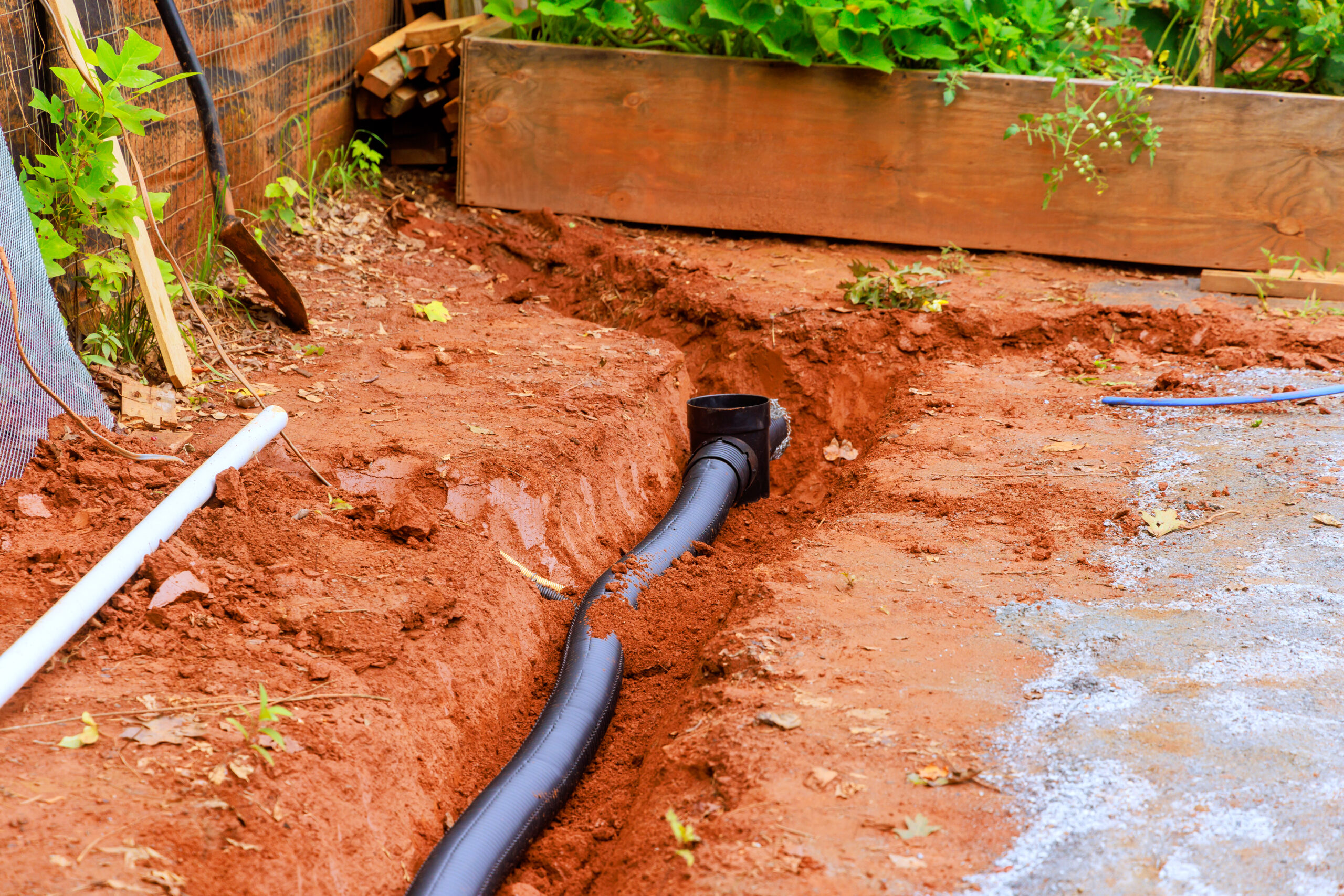
When rainwater pours off your roof, it can collect around your foundation, wash away mulch, and create muddy areas. Underground downspout extensions help carry this water away from the house through buried pipes, keeping your landscape cleaner and reducing standing water near the foundation.
A pop-up emitter is installed at the end of the underground pipe. It opens when water flows through and closes when the flow stops, providing a discreet outlet that blends into the lawn.
When should you use this system?
- Water pools near the foundation after heavy rain.
- Downspouts discharge onto patios, walkways, or landscape beds.
- Roof runoff washes away mulch or creates muddy spots.
- You want to eliminate visible above-ground drain extensions.
Basic installation steps:
- Plan the route: Choose a suitable discharge location away from the foundation and neighboring properties.
- Dig a trench: Create a path from the downspout to the outlet with a consistent downhill slope.
- Install the pipe: Connect the downspout to appropriately sized solid drainage pipe.
- Add the pop-up emitter: Install it at the end of the pipe according to the manufacturer’s instructions.
- Backfill and test: Restore the landscape and run water through the system to ensure it drains properly.
This solution is best for roof runoff. If your yard stays soggy because of groundwater or poor soil drainage, a different approach may be necessary.
French Drains: Managing Excess Water in the Soil
A French drain is designed to collect and redirect excess water beneath the ground. It typically consists of a perforated pipe surrounded by washed drainage stone inside a trench. Water enters through the surrounding stone and pipe openings, then flows toward a suitable outlet.
When should you use a French drain?
- Your lawn stays wet long after rainfall.
- Water collects at the bottom of a slope.
- Subsurface water seeps into low areas of the yard.
- Water needs to be intercepted before reaching a patio or landscape feature.
Basic installation steps:
- Identify the problem: Determine where the water originates and where it collects.
- Plan the route: Design a path that intercepts water and leads to an appropriate discharge point.
- Excavate the trench: Dig to the depth and width needed for your site’s conditions.
- Install the drainage materials: Use suitable permeable geotextile fabric when appropriate, add washed stone, place the perforated pipe, and cover it with additional stone.
- Finish the surface: Fold the fabric over the stone where appropriate, cover with soil or decorative stone, and ensure the pipe has a functional outlet.
French drains are especially useful for persistent wet areas, but they need proper grading, filtration, and an appropriate discharge point to work effectively. They may not solve problems caused by a high water table or heavily compacted soil without additional measures.
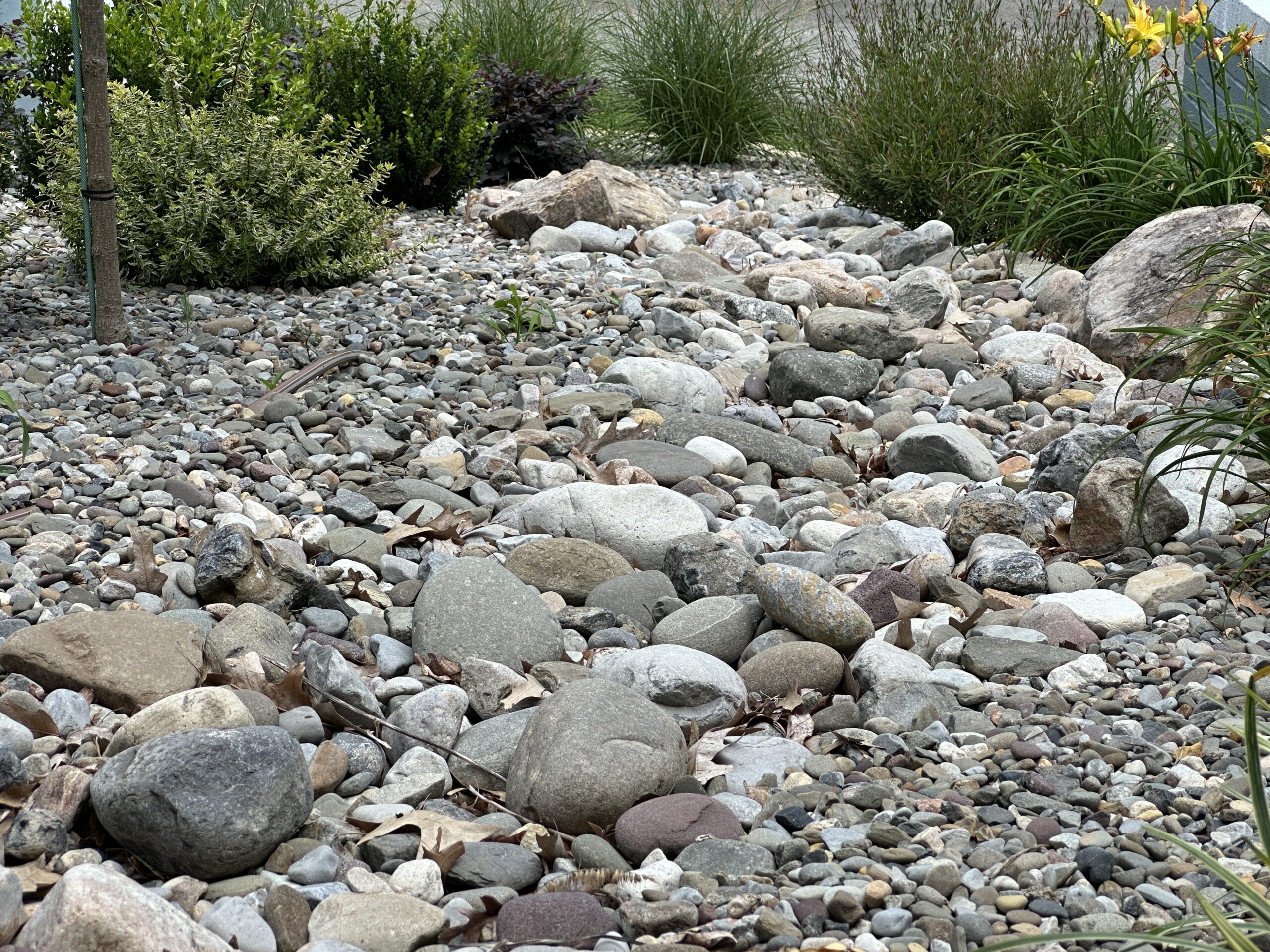
Dry River Beds: Attractive and Functional Drainage
A dry river bed, also called a dry creek bed, is a shallow, rock-lined channel that directs surface water through your landscape. When dry, it creates a natural decorative feature. During rainfall, it provides a defined path for runoff, helping reduce erosion and prevent water from spreading across the yard.
When should you use a dry river bed?
- Rainwater flows across the lawn and causes erosion.
- Your property has slopes or natural drainage paths.
- You want to direct surface runoff through a landscape bed.
- You want a drainage solution that adds visual interest to your yard.
Basic installation steps:
- Map the water’s path: Observe runoff during rainfall and choose a safe route toward a suitable discharge or infiltration area.
- Shape the channel: Excavate a shallow, gently curved bed that follows the landscape’s natural contours.
- Prepare the base: Shape the soil and use appropriate erosion-control materials where needed.
- Add the stone: Combine larger accent rocks with medium river rock and smaller gravel for a natural appearance.
- Finish with plants: Add suitable ornamental grasses or other plants along the edges without obstructing water flow.
Dry river beds work best for surface runoff. For areas with fast-moving water or heavy stormwater flows, the channel must be properly sized and stabilized to prevent erosion and displaced stones.
Choosing the Right Drainage Solution
Each system addresses a different type of water problem:
- Underground downspout extensions move roof runoff away from the house.
- French drains collect and redirect excess subsurface water.
- Dry river beds guide surface runoff while adding decorative appeal.
In some landscapes, combining these solutions provides the best results. For example, underground pipes can move roof water to a suitable outlet, while a dry river bed directs surface runoff farther down the property.
Before starting a project, check for underground utilities and local drainage requirements. Never direct water toward a building foundation or neighboring property. For major drainage issues, steep slopes, or persistent foundation seepage, consult a qualified drainage professional.
Final Thoughts
Effective drainage protects your home, supports healthier plants, and keeps your landscape functional and attractive. The key is identifying where the water comes from before choosing a solution. With proper planning and installation, downspout extensions, French drains, and dry river beds can help you manage excess water and enjoy your outdoor space for years to come.
With McDonald Landscapes, the journey starts with listening to your vision, continues with a design you can see, moves into a clear proposal and agreement, and finishes with a professional build that brings it all to life.
Love what you read? You’ll love what you see.
Check us out on our YouTube Channel for design tours, behind the scenes and more. @thelandscapelegend